What Are Rubber Wheels? Benefits, Types, and Industrial Applications
What Are Rubber Wheels? Benefits, Types, and Industrial Applications
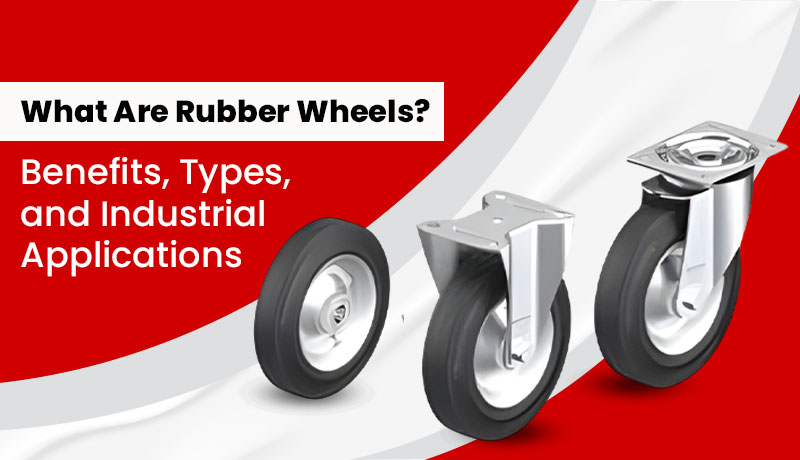
Rubber wheels play a critical role in a variety of industries, including manufacturing and logistics, healthcare, and consumer goods. The purpose of rubber wheels is to ensure maximum durability, enhance the performance of vehicles and equipment, and require less maintenance. Rubber wheels are ideal for use in heavy-duty applications where air-filled tires may not be reliable. At TM Castors, we understand that each industry has its unique demands when it comes to rubber wheels. This is why we offer a wide variety of rubber wheels that are tailored to various environments and usage types. In this blog, let’s first understand what rubber wheels are, their benefits, types, and uses of rubber wheels.
What is a Rubber Wheel for trolleys?
Rubber wheels are also known as solid tires or airless tires and are made without any air-filled components. They are shock-absorbing wheels designed to reduce vibrations, improve traction, and increase stability. Rubber wheels are ideal for industrial uses due to their robust construction and resistance to punctures. These wheels provide maximum durability without the need for frequent maintenance. Rubber wheels are commonly used in applications where high durability and traction are required. These include industrial carts, conveyors, and even medical equipment. In manufacturing, rubber wheels are used to move heavy loads and machines without damaging the floors. Their ability to absorb shock makes them ideal for sensitive environments like hospitals or labs.
Benefits of Rubber Caster Wheels
Rubber wheels are widely chosen because of the following benefits:
- Puncture Resistant: Solid rubber wheels are puncture-resistant as they do not contain air. This is a big benefit for environments that may have sharp objects in the area, which may puncture traditional tires, leading to flats.
- Extremely Durable: These wheels are built to handle heavy loads and withstand harsh conditions. Solid rubber wheels are made from materials that are built to last, and ultimately reduce the frequency of replacement and maintenance.
- Low Maintenance: Rubber wheels require less maintenance than pneumatic tires. They do not need to be monitored for air pressure or potential leaks, and therefore do not require that level of maintenance.
- Consistent Reliability: Rubber wheels provide reliable, high performance without pressure fluctuations. Consistent handling and stability are classic benefits associated with rubber wheels.
- Better Grip and Stability: Unlike conventional wheels, rubber wheels are designed to achieve superior grip and reduce the risk of carts sliding or slipping. This enhanced grip and improved stability give better safety and security while material handling, particularly in environments where safety is a primary concern.
- Smoother Mobility: Rubber wheels are easy to manoeuvre, making it easier to push or pull carts. This simple improvement means better productivity and reduced operator fatigue.
Reduced Noise: Rubber wheels can absorb shock, creating a quieter operation. This is helpful when working in noise-sensitive areas, such as hospitals, offices, or retail areas.
Common Uses of Small Rubber Wheels
Rubber wheels serve a wide range of functions, from heavy industrial uses to light consumer products. They are commonly used for:
- Warehouse and Distribution Centers: Rubber wheels are used where heavy loads need to be moved efficiently across large areas, enhancing productivity.
- Manufacturing Plants: They are used for transporting materials, components, or finished goods in manufacturing environments, where durability and reliability are required.
- Retail Environments: Rubber wheels are perfect for restocking of shelves and moving merchandise with minimal disruption.
- Healthcare Facilities: Rubber wheels provide quiet operation and reduce noise, which makes them beneficial for transporting medical equipment and supplies in hospitals and clinics.
- Office Environments: Rubber wheels are suitable for moving heavy furniture or equipment in office environments without damaging floors.
- Laboratories and Food Service: Rubber wheels are resistant to chemicals and moisture, which makes them ideal for laboratory settings and industrial kitchens where spills may occur.
- Shopping Carts and Baggage Trolleys: Rubber wheels are commonly used in shopping carts and airport baggage trolleys due to their ergonomic mobility and ease of movement.
Buy solid Rubber trolley wheels from TM Castors
Rubber wheels are essential in many industries due to their durability and versatility. While they are generally superior to plastic wheels, each type has its own advantages depending on the application. Understanding these differences can help you choose the right solution for your needs. At TM Castors, we are not only the best castor supplier in India, but we also help you find the right castor solution for you. Our casters provide high-performance, long-lasting bearings, hardened, precision-machined raceways, and lubrication points for all swivels to last long under demanding conditions. Need help choosing the right type of castor? Contact us and let our team assist you.
What’s The Difference between Light, Medium, And Heavy-Duty Castor Wheels?
- admin
- May 21, 2025